Gasoline Phaseout News – February 2026
EVs As A Source of Grid Resilience
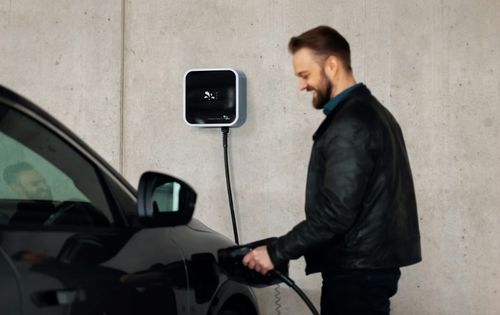
A compelling op-ed in the Los Angeles Times by Ken Alex underscores an important truth: EVs are an important asset for electric grid resilience.
The California Energy Commission projects EVs will drive the largest share of electricity demand growth through 2045. But EV charging is flexible, often occurring during low-demand hours. Many EV models offer “bidirectional” charging, meaning they can give their energy back to the grid and power homes during outages, which is a major benefit in wildfire-prone California.
At Coltura, we believe states must actively manage the transition to EVs. That means giving state energy offices and utility regulators clear authority to plan for transportation electrification in ways that strengthen the grid, such as aligning utility planning, smart charging, rate design, and bidirectional power programs.
Coltura Co-Executive Director Janelle London states, “With smart state leadership, EVs can lower costs, improve grid reliability, and replace gasoline pollution all at once.”
The US Has Fallen Behind on EVs. It’s Time to Regain Ground.
America’s EV approach has faltered, and the consequences are global.
The Trump Administration cancelled the $7,500 new EV and $4,000 used EV tax credits, froze funding for public charging and battery manufacturing, tried to impose tariffs, and disrupted the EV supply chain. Charging infrastructure remains unreliable, expensive, and confusing. U.S. automakers have lagged on technology, model choice, scale, and price, recently writing down nearly $50 billion in EV investments. Many dealerships continue steering customers toward gas vehicles to preserve service revenue. Meanwhile, the political climate has turned EV ownership into a culture-war flashpoint. The oil industry spends hundreds of millions a year on lobbying and misinformation to slow the EV transition, and consumers, especially those who use the most gasoline, have not been targeted for education about the fuel cost savings of EVs.
The result is that the U.S. now ranks behind 35 countries in EV share of new car sales.
By contrast, China’s massive investment in batteries, charging infrastructure, and automakers like BYD Auto helped it build a globally competitive EV industry with world-class scale and pricing. The European Union pairs strong incentives with high fuel prices, making EV ownership economically compelling. In Norway, electric vehicles account for nearly all new car sales.
The implications go far beyond transportation. Batteries and high-efficiency electric motors underpin not only EVs, but also drones, robotics, data centers, and advanced defense systems. Falling behind in EVs means falling behind in the supply chains that will define 21st-century economic and military leadership.
While Europe and Asia align incentives, infrastructure, and industrial policy around electrification, the United States risks ceding strategic ground.
The EV transition is not a niche consumer trend. It is a national competitiveness imperative. It’s time to treat it that way.
EPA Stops Regulating Tailpipe Emissions
On February 12th, the Trump Administration announced that EPA will no longer consider carbon and other greenhouse gases to be “pollutants” under the Clean Air Act and that it will stop regulating tailpipe emissions.
In response, Coltura’s Policy Director, Rob Sargent, said:
“Repealing the 2009 Endangerment Finding would remove the EPA’s legal authority and responsibility to use the Clean Air Act to limit climate-altering pollution from tailpipes and other sources. It’s an unabashed rejection of decades of scientific evidence and a bright green light for unchecked pollution from burning oil, coal, and methane gas. These reckless actions, by design, aim right at the heart of our country’s strategy to reduce harmful pollution from cars and trucks, the largest source of greenhouse gas emissions in the U.S.
By repealing the Endangerment Finding and the tailpipe rules, the federal government is siding with oil companies and polluters at the expense of everyday Americans. This will slow the transition to affordable electric vehicles and clean energy, increase household household energy costs, worsen air quality, and make it harder, if not impossible, for the U.S. to do our share of needed emission cuts.
The science is clear. The environmental, public health and economic consequences are real. And, the stakes have never been higher. EPA should be doing its job and regulating pollution that harms our health and the planet.”
See Coltura’s full statement on the EPA’s action here.
In Eight Countries, More Than Half of New Car Sales Are EVs
As of 2025, in eight countries, more than 50% of new car sales are EVs. Norway is in the lead, with 97% of new car sales being electric. Following it are Nepal (73%), Denmark (69%), Sweden (61%), Iceland (57%), Finland (56%), Netherlands (56%), and China (53%). The U.S. share is 10%.
Efficiency Maine Launches Coltura EV Shopping Tool to Help Drivers Switch to EVs
Earlier this month, Efficiency Maine, which administers the state’s energy efficiency programs, launched a new resource designed to streamline the complex EV car buying process for Maine drivers: the EV car shopping tool, presented by Coltura and powered by EVQ.
“The objective of the EV Program at Efficiency Maine is to help Mainers reduce their energy costs by switching to electric vehicles,” said Michael Stoddard, executive director of Efficiency Maine. “By introducing new tools to help Mainers shop for EVs, we hope to simplify the customer experience and encourage them to make the switch.”
“Maine has a relatively small population. But it punches above its weight when it comes to EVs and clean energy,” said Coltura’s policy director, Rob Sargent.
“There are tens of thousands of Mainers who would benefit from the switch to an EV. We’re thrilled to see Maine be the first state to use this tool and we’re excited to have played a role in making it possible.”
The tool can be accessed on Efficiency Maine’s website.
Data Insight of the Month:
California Is #1 State for Total Fuel Savings of EV Switch
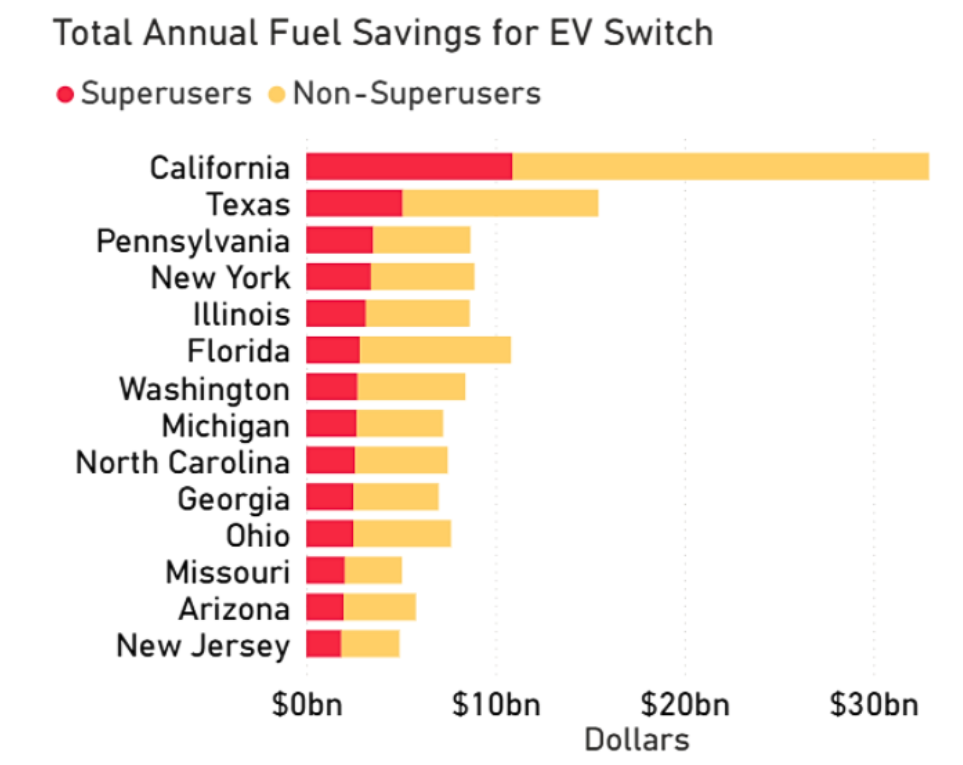
U.S. states, ranked by total annual fuel savings for people who switch from gasoline vehicles to electric vehicles, divided into Superusers and non-Superusers. “Superusers” are drivers in the top 10% for gasoline use. Source: Coltura Census-Level Gasoline Model.
California would save the most on fuel of any state, more than $30 billion dollars a year, if all the state’s drivers shifted to electric vehicles. Texas and Florida come in second and third for state savings, respectively. Visit https://data.coltura.org/tools/data-insights to see the savings for your state.
Gas Station of the Month:
Shopping Mall Sick of Decades-Long Gas Station Leak Next Door
Fed up with decades of fuel leaks from the Cumberland Farms gas station next door, a shopping mall erected a barricade of dirt, gravel, and culvert pipes in the mall’s parking lot. The mall claimed the gas station had been leaking fuel for 40 years, contaminating mall property and preventing construction of a new mall in its place. The mall manager said, “Finally, we’re going to get their attention, by blocking two of their entrances to our property.”
Want more stories like these in your inbox? Sign up below for your free subscription to Gasoline Phaseout News!
Culture Corner:
Ethiopia’s New Culture of EVs
Ethiopia’s electric vehicle shift is happening at breakneck speed — not because of climate pledges, but because the economics finally line up.
In Ethiopia, fuel is expensive and often scarce because the country imports all the oil it consumes. Electricity, by contrast, is cheap, reliable, and increasingly renewable — with new supply from the Grand Ethiopian Renaissance Dam pushing costs down even further.
That reality drove bold policy. In 2024, the government banned imports of fossil-fuel vehicles and slashed tariffs on electric ones, aiming to shrink its massive energy import bill after financial strain and support from the International Monetary Fund.
The impact has been swift. EV prevalence has jumped from under 1% to over 6% in less than two years — already above the global average.
From crowded streets in Addis Ababa to new assembly lines and charging hubs, Ethiopia is showing how affordability can turbocharge the clean transport transition.