


 Free EV Charging Stations Near You: Find Them In 2026
Learn how to find free EV chargers and discounted options. Save money and make the most of your EV journey!
Last updated: September 2026.

If you’re searching for free EV charging stations near me, you’re not alone. “Free” EV charging is real — but it’s usually limited to specific locations, often slower Level 2 chargers, and it can come with rules like time limits or paid parking.
The fastest place to start is a charging map with a free-charging filter. PlugShare, ChargePoint, and ChargeHub can all help you find chargers reported as free or $0.
Our nonprofit's guide below shows you how to find stations marked “Free” or “$0”, how to verify they’re still free, and what to do when a free charger isn't the best option.
↳ Jump to: Quick ways Maps + trip planning Step-by-step Where to find free charging EV charging discounts FAQ
Is EV charging free? Sometimes — but most public charging costs money.
“Free” usually means $0 electricity at specific locations, but you may still run into parking fees, time limits, or access rules. Use this guide to find stations marked Free / $0 and verify the fine print before you go.
Next step after this article: Looking for good ways to find EV charging stations near you? Read our quick guide on the 3 best apps: How To Find EV Charging Stations.
Key Takeaways
- Start with a free-charging filter. PlugShare, ChargePoint, and ChargeHub all provide ways to look specifically for free charging.
- Verify before driving there. Check the station's latest pricing, access rules, recent driver reports, and the charging network's app when available. You can also cross-check public station information with the U.S. Department of Energy's station locator .
- Make sure the charger works with your EV. Connector type and charging speed matter just as much as price. See our Level 2 vs. DC fast charging and connector guide .
- "Free" doesn't always mean no cost. Parking fees, entrance fees, time limits, idle fees, and access restrictions can still apply. See when free charging is actually worth it .
- Don't make a long detour just to save a few dollars. A nearby paid charger can sometimes be a better value than a slow or inconvenient free charger. Compare cheap and discounted EV charging options .

Free EV Charging Near Me: 5 Fast Ways To Find It
- Use PlugShare's Free Charging filter . Search your city, ZIP code, destination, or current area. PlugShare has a dedicated Free Charging filter, and you can check recent driver check-ins, photos, and station details before you go.
- Use ChargePoint's Free filter . Open the ChargePoint map and select Free from the quick filters. You can also filter by availability, charging speed, connector compatibility, network, and other station details.
- Try ChargeHub's free-station filter . ChargeHub provides a Free Stations filter and also lets you narrow charging results by connector type, charging level, network, and other criteria.
- Check places where complimentary charging may be offered . Look at municipal facilities, libraries, hotels, shopping destinations, workplaces, colleges, dealerships, and other destinations — but never assume that every charger at these locations is free.
- Verify the exact charger before driving there . Check the price, connector, access rules, hours, and recent status. If the charger belongs to a network, its own app is often the best place to confirm current pricing and availability.
Quick tip: If a station is listed as free but the information is old, treat the price as unconfirmed until you check a more recent listing or the charging network.
Is Free EV Charging Worth It?
Free EV charging is usually most valuable when the charger is somewhere you already plan to spend time. A free charger at a hotel, workplace, library, shopping destination, or other stop can save money without adding much inconvenience.
A free charger may be less worthwhile if you have to make a long detour, wait for an occupied charger, pay for parking, or spend much longer charging than you would at a nearby paid station.
| Free Charging Is More Attractive When... | A Paid Charger May Be Better When... |
|---|---|
| You're already going to the location | You would need to make a significant detour |
| You can leave the car charging while doing something else | You need to get back on the road quickly |
| The station has recent reports confirming $0 charging | The free station's pricing or availability is uncertain |
| There are no meaningful parking or access costs | Parking, entrance, or other fees erase the savings |
In sum: Compare the total cost and inconvenience, not just the price of the electricity.
Best Maps To Find Free EV Charging
No single charging map is perfect. For free charging, it can be useful to discover a station in one app and then confirm its current details with the charging network before you travel.
| Tool | Best Use | Why It's Useful |
|---|---|---|
| PlugShare | Finding and verifying free chargers | Free Charging filter plus driver check-ins, reviews, photos, and broad station coverage |
| ChargePoint | Finding available chargers and checking station details | Free quick filter plus availability, connector, speed, price, and other filters |
| ChargeHub | Another broad free-charger search | Free-station filter plus connector, charging-level, network, and availability information |
| U.S. Department of Energy AFDC | Independent station-location cross-check | Government-maintained database covering public charging stations in the United States and Canada |
| Tesla app | Tesla Superchargers and Destination Charging | Best place to check Tesla charging prices, site information, and eligible charging benefits |
Our recommendation: Start with PlugShare, ChargePoint, or ChargeHub to find candidates, then confirm the exact station's current pricing and restrictions before driving there.
Looking for charging stations whether they're free or paid? See our guide to finding EV charging stations near you.
Where You Can Find Free EV Charging Stations Near You
Free charging can show up in many places — but policies can change by location (and over time). Always verify the specific station in PlugShare or the network’s app before you go.
| Where to Look | Can Free Charging be available? | Typical Charging | What to Check |
|---|---|---|---|
| Libraries / municipal facilities | Sometimes | Often Level 2 | Hours, time limits, parking rules |
| Hotels | Sometimes | Often Level 2 | Guest restrictions and parking fees |
| Retail / grocery / malls | Sometimes | Varies | Customer restrictions, pricing, time limits |
| Park-and-rides / transit facilities | Sometimes | Often Level 2 | Permits, transit requirements, parking fees |
| Workplaces | Employer-dependent | Often Level 2 | Employee access and workplace policies |
| Colleges / universities | Sometimes | Varies | Visitor access, permits, parking fees |
| Dealerships | Sometimes | Varies | Brand/customer restrictions and business hours |
| Casinos / resorts / destinations | Sometimes | Varies | Guest rules, parking, time limits |
Grocery Stores And Big Retail (Example Searches: Kroger, Safeway, And More)
Some stores host EV chargers, but not every location has charging and not every charger is free. “Free” may also apply only while you shop.
- Search the store name in PlugShare (for example, “Kroger” or “Safeway”).
- Open the listing and check price notes, recent check-ins, and photos.
- Confirm whether it’s free only while shopping or has time limits/parking rules.
Hotels
Many hotels offer charging as an amenity, but it may be free, discounted, or paid depending on the property. Some chargers are guests-only.
- Filter PlugShare by hotel locations near your destination.
- Confirm guests-only rules and whether charging is included.
- Check for parking fees that may apply even if electricity is free.
Apartments And Condos
Some apartments offer charging as an amenity, but it may be paid, access-controlled, or bundled into a monthly parking fee. Truly free apartment charging is relatively rare — and it often comes with residents-only access rules.
- Search your building name or neighborhood in PlugShare and review access notes.
- Look for terms like residents-only, gate code, managed parking, or garage access.
- If you’re apartment-hunting, ask whether charging is included in rent/parking or billed separately.
Libraries And Municipal Lots
Libraries and municipal buildings sometimes have free or low-cost Level 2 chargers, often with posted time limits.
- Look for stations marked Free / $0 and read recent check-ins (ideally within 30 days).
- Confirm hours of operation and any enforcement rules.
Park-and-Rides / Transit Stations
Some commuter lots and transit hubs offer Level 2 charging — occasionally free — especially where agencies support EV adoption.
- Verify whether you need a permit or must be using transit.
- Watch for commuter time caps (for example, “charging only while riding”).
Malls And Movie Theaters
These are common “free-friendly” places because you’ll spend time there anyway — but availability and pricing vary by site.
- Check PlugShare for recent check-ins confirming $0 and for photos of signage.
- Confirm whether the charger is customers-only or has a time limit.
Casinos And Other Destinations
Casinos, resorts, and destinations sometimes provide charging to keep visitors on-site longer — sometimes free, sometimes paid.
- Verify guest policies and any parking fees.
- Cross-check pricing in the network app before arriving.
Colleges And Universities
Many campuses have chargers, but pricing and visitor access vary widely.
- Check listing details for visitor rules and where the chargers are located.
- Watch for permit requirements or pay-to-park lots.
Parks And Public Sites
Some recreation areas and public facilities have chargers — helpful for day trips, but not always free and not always reliable as a primary charging plan.
- Verify pricing and any entrance/parking fees.
- Check recent check-ins to confirm availability.
Campgrounds
Some campgrounds offer EV charging or RV outlets, but you should confirm policies before arrival.
- Check whether the site allows EV charging and whether fees apply.
- Confirm outlet type if using an RV hookup.
Ad-Supported Or Sponsor-Funded Charging
Some sites offer limited free charging supported by ads or sponsorships — typically Level 2. These networks and policies can change quickly, so treat “free” as something to verify in the apps, not assume.
- Confirm pricing in PlugShare and the network app before driving over.
- Look for limits like “first 30 minutes free” or posted time caps.
Museums, Nonprofits, And Community Sites
Some museums, nonprofits, community centers, and other public-serving facilities offer free EV charging. Check the individual location and recent station information before assuming charging is complimentary.
- Use listings and check-ins to confirm it’s still Free / $0.
- Confirm business hours and any parking restrictions.
Want another way to cross-check station locations? The U.S. Department of Energy’s Alternative Fuels Data Center provides a locator: Electric Vehicle Charging Station Locations.
Looking for An EV Charging-Time Breakdown?
Public charging time can range from a quick DC fast-charging stop to several hours on Level 2. For real-world examples, charging-level comparisons, and a simple formula for estimating your time, read: How Long Does It Take To Charge An Electric Car?

How To Find Free EV Charging Stations Step By Step
1. Search The Area Where You Need To Charge
Enter your current location, city, ZIP code, destination, or another location into PlugShare, ChargePoint, or ChargeHub.
2. Filter For Free Charging
Turn on the app's free-charging or $0 filter. Don't assume every station shown on a general EV charging map is free.
3. Check Your Connector And Charging Speed
Make sure the station has a connector your vehicle can use and that the charging speed fits your needs. Some vehicles can use additional connector types with an approved compatible adapter.
4. Read The Station Details
Look for the listed charging price, hours, parking rules, access restrictions, time limits, and any other fees.
5. Check Recent Information
Recent driver check-ins, photos, and status reports can help you spot chargers that have become paid, are unavailable, or have new access restrictions.
6. Confirm With The Charging Network When Possible
If the station belongs to a charging network, check that network's app or station page for current pricing and availability before making a special trip.
7. Have A Backup Charger
A free charger may be occupied or unavailable. Save another nearby charging option so you aren't depending on a single station.
What about off-peak charging? Some charging networks and utilities use time-of-use pricing, but others don't. Check the specific station's pricing rather than assuming a public charger will be cheaper simply because you arrive during an off-peak period.

Download the EV Home Charging Guide
Charging at home typically costs less than public charging. Public charging costs vary widely.
Maximize your EV charging efficiency at home with our nonprofit's free guide!
This free resource provides valuable information on:
- Choosing the Right Home Charger: Understand charger types and pick what fits your needs.
- Installation Tips: Learn common installation requirements and best practices.
- Cost-Saving Strategies: Reduce home charging costs and optimize energy use.
Download the Ultimate EV Home Charging Cheat Sheet by entering your email below and receive monthly news and inspiration from our award-winning nonprofit.
Free Tesla Charging Stations Near Me: What's Actually Free?
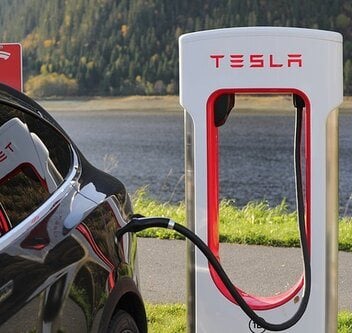
Most Tesla Supercharging is paid, but some Tesla vehicles or accounts may have qualifying free Supercharging or Supercharging credits. Check the Tesla app to see whether your vehicle has an eligible benefit and how much remains.
| Tesla Charging Option | Is It Free? | What To Know |
|---|---|---|
| Tesla Supercharger | Usually paid | Check the Tesla app for the site's current price before charging. |
| Eligible free Supercharging / credits | Can cover qualifying charging | Eligibility is tied to the vehicle/account. Tesla says credits can be used at Tesla-owned Supercharger sites. |
| Tesla Destination Charging | Varies by location | Some locations charge a fee. Current pricing is shown in the Tesla app or vehicle interface. |
| Other free public Level 2 charging | Sometimes | A Tesla may be able to use compatible non-Tesla Level 2 equipment with the appropriate connector or approved adapter. |
Important: Even drivers with free Supercharging can face certain Supercharging-related fees. Tesla says congestion fees can still apply in qualifying situations.
For the most accurate information, check your vehicle and the specific charging site in the Tesla app before you go.
Free Level 2 vs. Free DC Fast Charging: What You'll Actually Find
Before driving to a free charger, check both its charging speed and connector type. A free charger isn't useful if your vehicle can't connect to it or if the charging speed doesn't fit your plans.
| Charging Type | Common U.S. Connectors | Where You May Encounter Free Charging |
|---|---|---|
| Level 2 | J1772 and J3400/NACS | Hotels, workplaces, municipal facilities, retail destinations, campuses, and other destination charging locations |
| DC Fast Charging | CCS, J3400/NACS, and some CHAdeMO | Site-specific promotions, manufacturer charging benefits or credits, and occasional promotional or sponsored charging |
Connector check: Level 2 and DC fast charging use different connector systems. Some EVs can use additional charging equipment with an approved compatible adapter. Check your vehicle manufacturer's guidance before relying on an adapter.
Free fast charging: If a DC fast charger appears to cost $0, confirm why. The price may depend on a vehicle promotion, account benefit, time-limited offer, or the individual charging location rather than the entire network being free.
EV Purchases With Charging Credits And Free Perks
Some new EVs include charging benefits such as complimentary charging credits, discounted charging, free sessions, or a limited period of promotional charging.
Always check the exact terms for the vehicle and model year you're buying. Before counting a charging offer as part of the value of an EV, verify:
- Which charging network is included
- Whether the benefit is measured in dollars, kWh, sessions, or time
- How long the offer lasts
- Whether enrollment is required
- Whether idle, congestion, parking, or other fees are excluded
Check current EV charging offers and confirm the final terms with the automaker before purchasing.
Looking To Save Money On An EV in 2026?
Our nonprofit has collected some of the best resources on purchasing or leasing an EV and put them into an easy-to-use cheat sheet.
It’s a must-read for people considering an EV.
Simply enter your email to access the free cheat sheet and receive monthly news and inspiration from our nonprofit.
Cheap And Discounted EV Charging When Free Chargers Aren't Available
Free charging isn't always the cheapest option once you consider detours, parking costs, and your time. If you regularly use the same fast-charging network, a paid membership can sometimes reduce your overall charging cost.
Current examples as of September 2026:
| Plan | Monthly Fee | Advertised Charging Savings | Best Fit |
|---|---|---|---|
| Electrify America Pass+ | $7/month | About 25% | Drivers who regularly use Electrify America |
| EVgo Plus | $6.99/month | Up to 15% | Regular EVgo users |
| EVgo PlusMax | $12.99/month | Up to 30% | Frequent EVgo users |
Plans, rates, and station pricing can change. Check the network's current pricing before subscribing.
Quick Break-Even Check
A simple way to evaluate a percentage-based membership discount is:
Approximate break-even charging spend = monthly membership fee ÷ discount percentage
For example, a $7 monthly plan that saves about 25% would have a simple break-even point of approximately $28 per month in eligible charging before considering differences in station pricing or other fees.
If you only public-charge occasionally, pay-as-you-go may be better. If you repeatedly use the same network, compare your actual monthly charging receipts with the available membership plan.

Join Us
Switching gas cars to EVs offers hidden health benefits by reducing harmful emissions. That can mean fewer risks of asthma, heart and lung diseases, and other vehicle-emissions-related health problems — especially for families living near busy roads.
Imagine cleaner air for your children to breathe, a quieter neighborhood, and fewer trips to the mechanic. EVs aren’t just about saving money — they’re about creating a better future.
Help Build a Healthier Tomorrow
Join thousands of others making the switch to cleaner transportation! Sign up for our nonprofit’s Beyond Gasoline newsletter to stay up to date on the growing movement.

Free vs. Cheap EV Charging: 6 Ways To Spend Less
- Compare the total cost, not just the electricity price. A $0 charger may still involve paid parking, an entrance fee, or a long detour.
- Use free charging where you already spend time. Charging while you're at work, a hotel, a library, or another planned destination can make free Level 2 charging much more convenient.
- Check time-of-use pricing when the network offers it. Some public charging networks vary prices by time of day, while others do not.
- Consider a membership if you frequently use one network. Compare the monthly fee with what the discounted rate would have saved on your recent charging sessions.
- Avoid idle, congestion, and parking fees. Move your vehicle when charging is complete and check the station's rules before starting a session.
- Use home charging when it makes sense. For drivers who can charge at home, it is often more convenient than searching for free public charging. Your actual cost depends on your utility rate and charging schedule.
The cheapest charger isn't necessarily the station with the lowest advertised electricity price. Time, parking, detours, charging speed, and reliability all affect the real value of a charging stop.

Conclusion: Finding Free EV Charging Near You
Free EV charging still exists, but availability, pricing, and access rules can change from one station to another. The quickest approach is to use a charging map's free-charging filter, check that the charger is compatible with your EV, and verify the station's current details before you travel.
Start with PlugShare, ChargePoint, or ChargeHub, and use the charging network's own app to confirm pricing and availability when possible.
If a free charger requires a significant detour, paid parking, or a long wait, compare it with a nearby paid option. The best charging choice is the one that saves you money and works for your trip.

Haven't switched to an EV yet?
Imagine never having to visit a gas station again, or needing an oil change again or worrying about unpredictable gas prices. With an electric vehicle, this could be your reality—while potentially saving thousands of dollars a year.
Curious how much you could save switching to an EV? Get a quick estimate of your savings below!
*Disclaimer: This tool is only intended to provide an estimate of potential savings. Actual results will vary. Learn more about the calculation and the Electric vs Gas Calculator here.
Free And Discounted EV Charging FAQ
Where can I find free EV charging stations near me?
Start with PlugShare and look for stations marked “Free / $0,” then confirm with recent check-ins and photos. For a second “free-only” view, use ChargePoint (filter Price → Free) or ChargeHub (toggle Free ports only). Finally, open the station in the network app (when applicable) to confirm today’s pricing and session rules.
Are charging stations free?
Sometimes. Some stations offer $0 electricity, but “free” may still come with parking fees, time limits, guests-only rules, or idle fees. Always verify the exact station before you go.
3. Can I charge my EV at home for free?
Sometimes — but it depends. Home charging usually shows up on your electric bill. It can feel “free” if charging is bundled into rent/parking, reimbursed by an employer, or offset by solar — but most drivers pay a home electricity rate.
How do I get free EV charging near me (fast)?
Use the 5 fast ways near the top, then follow the step-by-step walkthrough if you want a repeatable process.
Where can I charge my electric car for free?
Free charging is most commonly found at libraries, municipal lots, community centers, some retail destinations, malls/movie theaters, and some hotels (often guests-only). Use recent check-ins to confirm it’s still free.
Free Level 2 chargers near me — where are they usually located?
Most free options are Level 2. Look at libraries/municipal lots, campuses, transit lots, malls, and some hotels. Time limits are common — verify before you arrive.
Free fast charging stations near me — are any actually $0?
Occasionally, but it’s less common. True $0 fast charging is often tied to limited-time promos, credits, or special sponsored sites. Confirm in the network app and check recent PlugShare check-ins.
Free Tesla charging near me — is it real?
Sometimes, but most Tesla Supercharging is paid. “Free” is more likely to come from hotels/destination chargers, workplaces, occasional dealership access, promotions/credits, or free public Level 2 (often J1772 with an adapter).
Kroger EV charging: is it free?
It depends on the specific store and the charging provider. Some locations may be free, others are paid, and some stores don’t have chargers at all. Search the exact store in PlugShare and review price notes + recent check-ins before you go.
Safeway EV charging: is it free?
It depends on the location and charging provider. Some sites may be free, others are paid, and availability can change. Use PlugShare to check the exact Safeway location and confirm details before you go.
What are some discounted EV charging options when free chargers aren’t available?
Subscription services like Electrify America Pass+ and EVgo memberships can provide discounts (benefits, pricing, and station rates vary by plan and location).
Why does a “free” charger sometimes still cost money?
A charger can be “free” for electricity but still have costs like paid parking, entrance fees, guests-only restrictions, time limits, or idle fees after charging ends. Always verify details before you arrive.
What EV charging apps do I actually need?
Many drivers use more than one: PlugShare to discover and verify, the network app to confirm pricing and start sessions (for example, ChargePoint), and ABRP for road trip planning. If you only pick one to start, PlugShare is often the most useful for checking whether a station is still truly “free.”
Who pays for free EV charging stations?
It depends on the station. Free charging may be funded by a business, employer, hotel, property owner, municipality, charging promotion, automaker benefit, or another organization that chooses to offer charging as an amenity. The electricity may be free to the driver even though someone else is covering the cost of operating the charger.
Can a free EV charging station still charge idle or parking fees?
Yes. A charging session can have $0 electricity while the location still charges for parking, access, or leaving your vehicle connected beyond a time limit. Check both the charging station's pricing and the property's parking rules before you start charging.
Does ChargePoint show all charging stations?
No. ChargePoint is strongest for stations on the ChargePoint network and its roaming partners. For the widest discovery — especially for “free” reports — use PlugShare or ChargeHub, then verify the exact station in the network app before you go.